
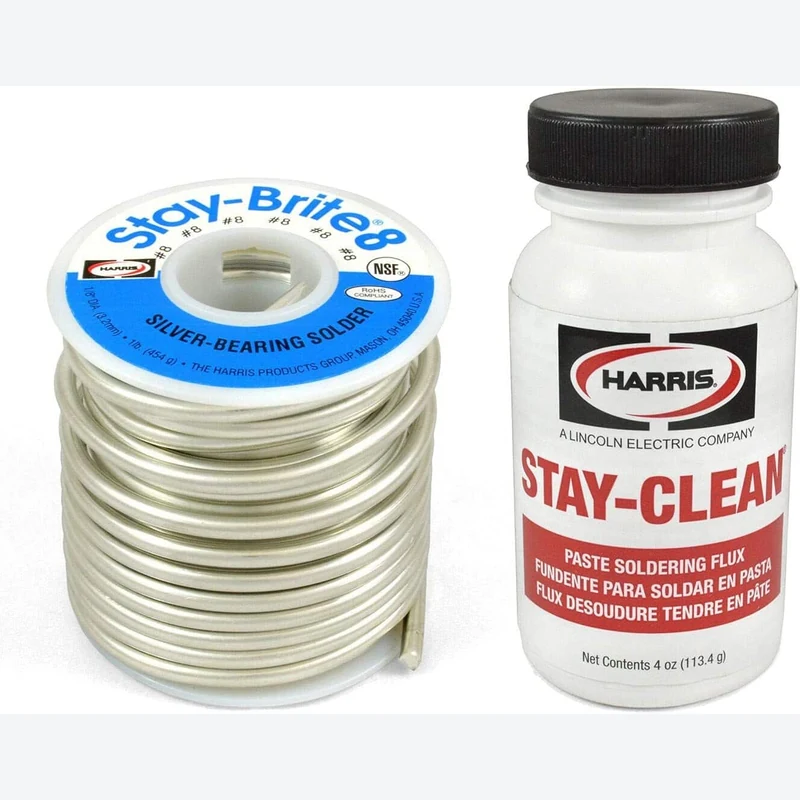
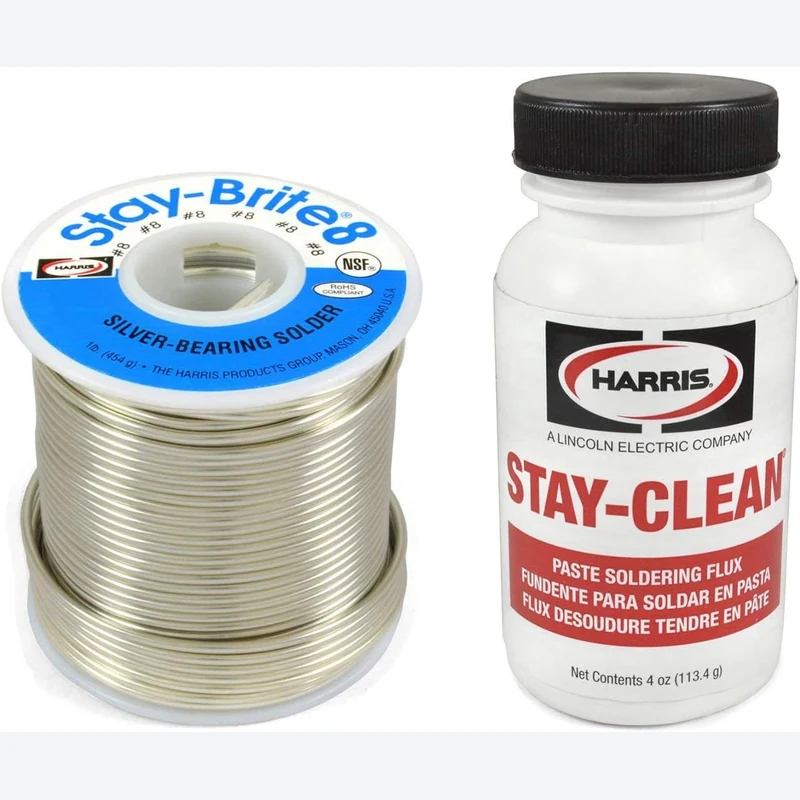
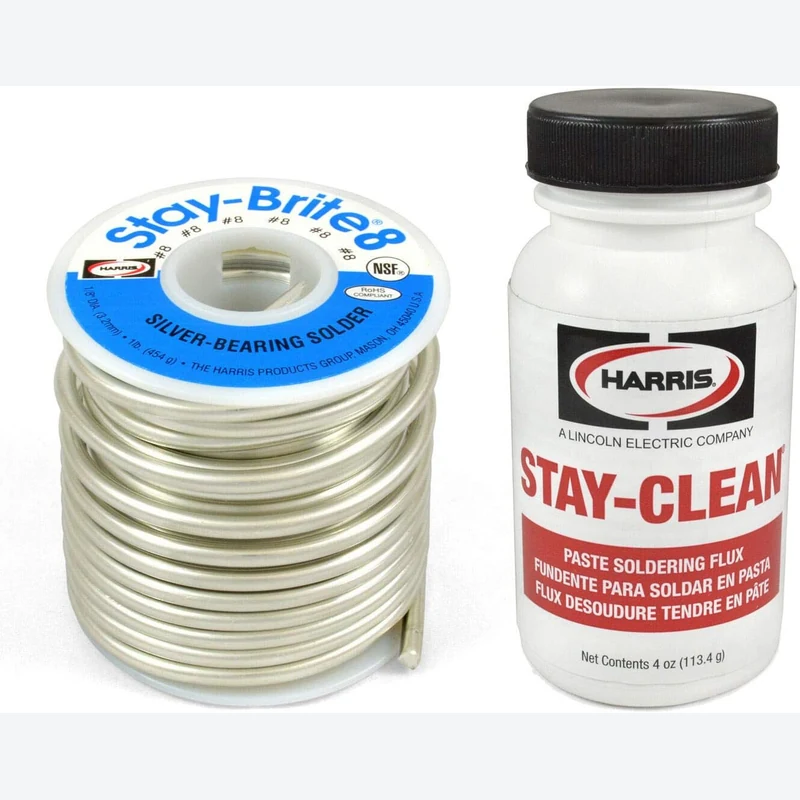
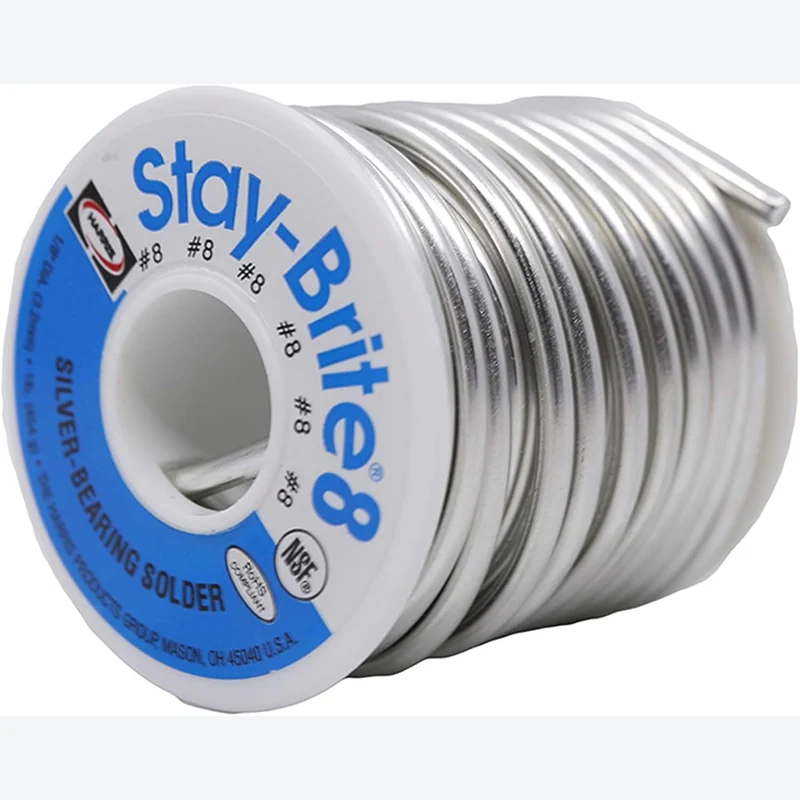
Solder performance is only half the equation — flux activation, alloy diameter, and spool size determine whether a joint holds on the first pressure test. Stay-Brite 8 is a premium tin-silver lead-free solder with higher silver content than standard Stay-Brite, a 535–550°F melting range (not a single eutectic point), and roughly 10,000 PSI tensile strength on copper. This guide maps every product format and explains how to pair solder with Stay-Clean liquid or paste flux for HVAC, plumbing, and refrigeration work.
All Stay-Brite 8 wire is RoHS compliant and NSF 51 food service listed — relevant for potable plumbing and condensate-adjacent paths. The alloy bonds copper, brass, steel, and stainless with correct prep; aluminum requires dedicated filler covered on our aluminum page.
Alloy fundamentals
Stay-Brite 8 adds silver to the tin matrix for strength and ductility. The melting range, not one temperature, keeps the alloy molten long enough to fill slightly wider capillary gaps — a practical advantage on worn couplings and field-reamed tubing. Flow happens between 535°F and 550°F when flux has cleared oxides and the fitting absorbed adequate heat.
Compare that to 50/50 tin-lead or generic lead-free wires that technicians still find in mixed truck stock. Stay-Brite 8 costs more per foot but reduces callbacks on pressurized lines where joint integrity justifies premium chemistry. Standardize inventory so apprentices never grab the wrong spool.
Spool size selection
The 1 oz spool suits service vans and emergency bags — enough for several valve or flare repairs without bulk. The 4 oz spool is the daily rough-in and maintenance standard for crews running multiple jobs per week. Both spools use the same alloy; only quantity differs.
Wire diameter in kits is chosen for general copper cup work — typically around 1/8 inch for heat absorption balance. Feed rate should match joint size: small cups need less wire than you think; overfeeding creates drip balls that look ugly and hide incomplete penetration.
Stay-Clean liquid flux
Stay-Clean is the default liquid flux for Stay-Brite 8 on copper and brass. Brush a thin film on both mating surfaces, assemble immediately, and heat the fitting until flux bubbles and turns clear. Introduce solder at the joint mouth opposite the flame — capillary action pulls alloy into the cup when temperature is correct.
Liquid flux spreads evenly on horizontal runs and accessible mechanical-room joints. Rinse or wipe residue after cooling on potable lines and anywhere corrosion risk matters. In closed refrigeration loops, prevent flux from entering the tubing interior — external application only.
Paste flux applications
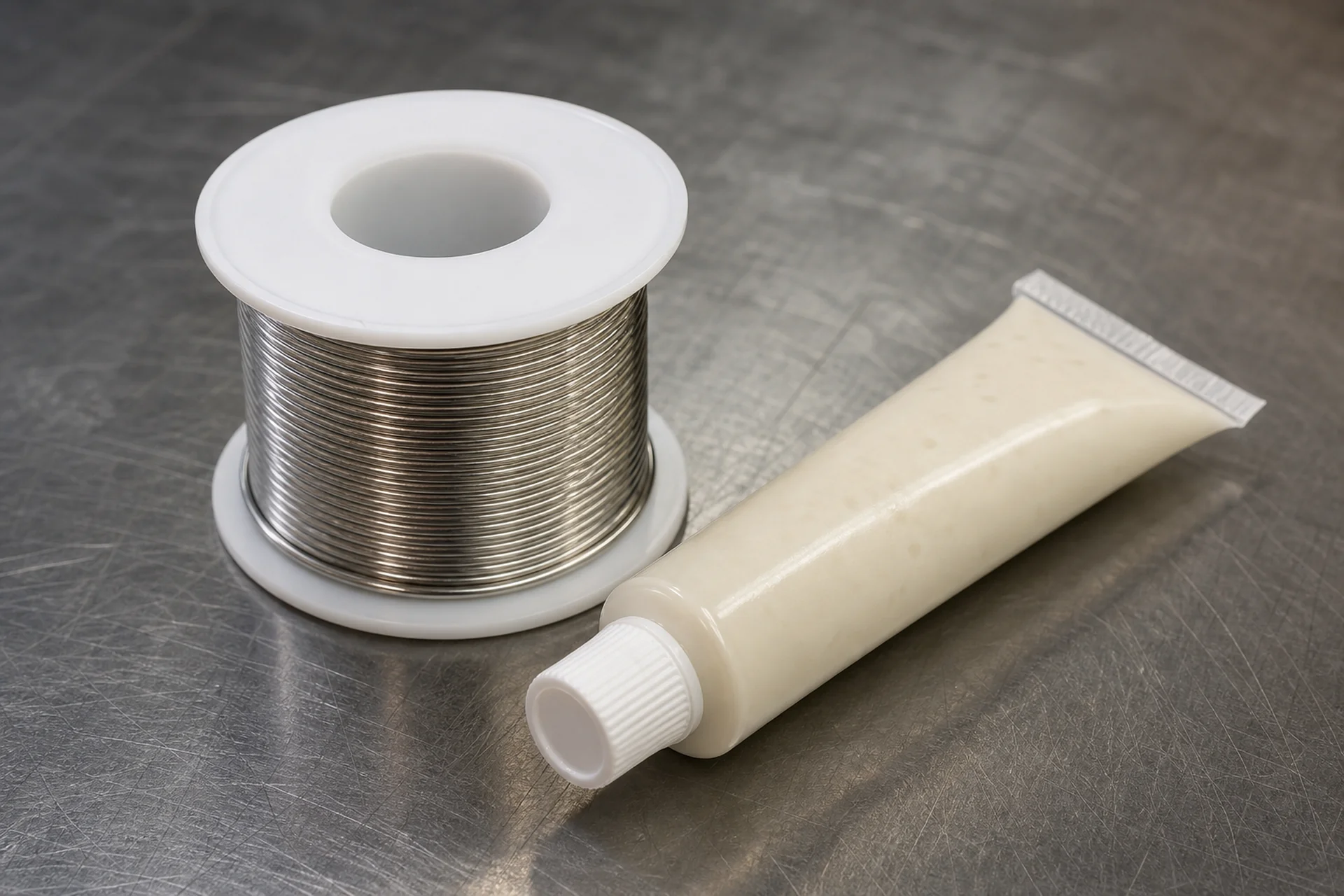
Paste flux resists gravity on vertical stacks, ceiling line sets, and overhead rack piping. Swipe with a brush or applicator, assemble, and heat gently until the paste liquefies. The same activation rules apply — if solder balls on contact without wicking, the fitting is too cold or oxides remain.
Keep separate brushes for paste and liquid to avoid thinning paste with liquid carrier. Cap tubes tightly — paste dries out in hot vans and loses thixotropic hold that makes it valuable on vertical work.
Trade-specific kits
HVAC, plumbing, and refrigeration kits bundle wire, matched flux, and an applicator in labeled packaging. Kits reduce SKU confusion for first-time buyers and apprentices. Chemistry is identical across kits — packaging reflects typical job context, not different alloy formulas.
The HVAC kit targets line-set and valve work described on our HVAC page. The plumbing kit emphasizes NSF-listed potable applications. The refrigeration kit aligns with closed-loop repair workflows and leak-test discipline on racks and cases.
Flux and heat sequence
Correct sequence: clean and deburr, flux, assemble, heat fitting (not wire), feed solder until full fillet, remove heat, cool, clean flux residue. Skipping deburr or ream causes capillary blockage that no flux fixes. Heating wire directly creates balls; heating the fitting draws alloy inward.
MAP or propane with a swirl tip suffices for most 1/2-inch through 3/4-inch copper. Larger diameters and steel adapters need longer soak. The melting range gives a few extra seconds of flow versus single-point eutectic solders — use that window for visual confirmation, not as an excuse to overheat.
Material pairing table
Copper + Stay-Clean or paste: Primary use case — potable, HVAC, and refrigeration copper cups. Brass valves + Stay-Clean: Longer preheat on brass bodies before feeding wire. Steel + Stay-Clean: Aggressive cleaning, extended heat — dull fillets are normal. Stainless + Stay-Clean: Mechanical abrasion essential; verify flux compatibility on food-grade installs.
Aluminum: Use dedicated aluminum solder, not Stay-Brite 8 wire — see aluminum applications. Mixing copper flux onto aluminum produces the classic grainy failure within minutes of pressure test.
Versus standard Stay-Brite
Standard Stay-Brite works on tight, clean cups in shop conditions. Stay-Brite 8 increases silver content for higher strength and uses a broader melting range for field tolerance on imperfect fits. Melting behavior detail lives on our melting point page; pressure context on pressure rating.
Silver content specifics are broken down on silver content. If joints fail despite correct pairing, consult problems for diagnostic steps before blaming the alloy.
Storage and shelf life
Store spools dry — alloy does not degrade in normal van temperatures. Flux bottles stay upright with caps sealed; heat accelerates separation in liquid flux. Paste tubes should not sit on dash boards in direct sun. Inventory rotation: use older flux bottles first and label open dates on kits shared across crews.
Separate solder from lead-bearing legacy stock still found in old plumbing tins. Cross-contamination violates lead-free job specs and confuses visual alloy identification — Stay-Brite 8 has a characteristic silver sheen when flowed correctly.
Recommended truck loadout
A balanced loadout: one 4 oz spool, one 1 oz backup, Stay-Clean liquid, paste flux tube, separate brushes, and the trade kit matching your primary work (HVAC, plumbing, or refrigeration). Add aluminum solder only if your route includes condenser coil repairs. Label everything with trade names, not just "silver solder."
Technician feedback on real-world pairing results is collected on reviews. Pair this guide with application pages for HVAC, plumbing, and refrigeration for job-specific heat and test procedures.