
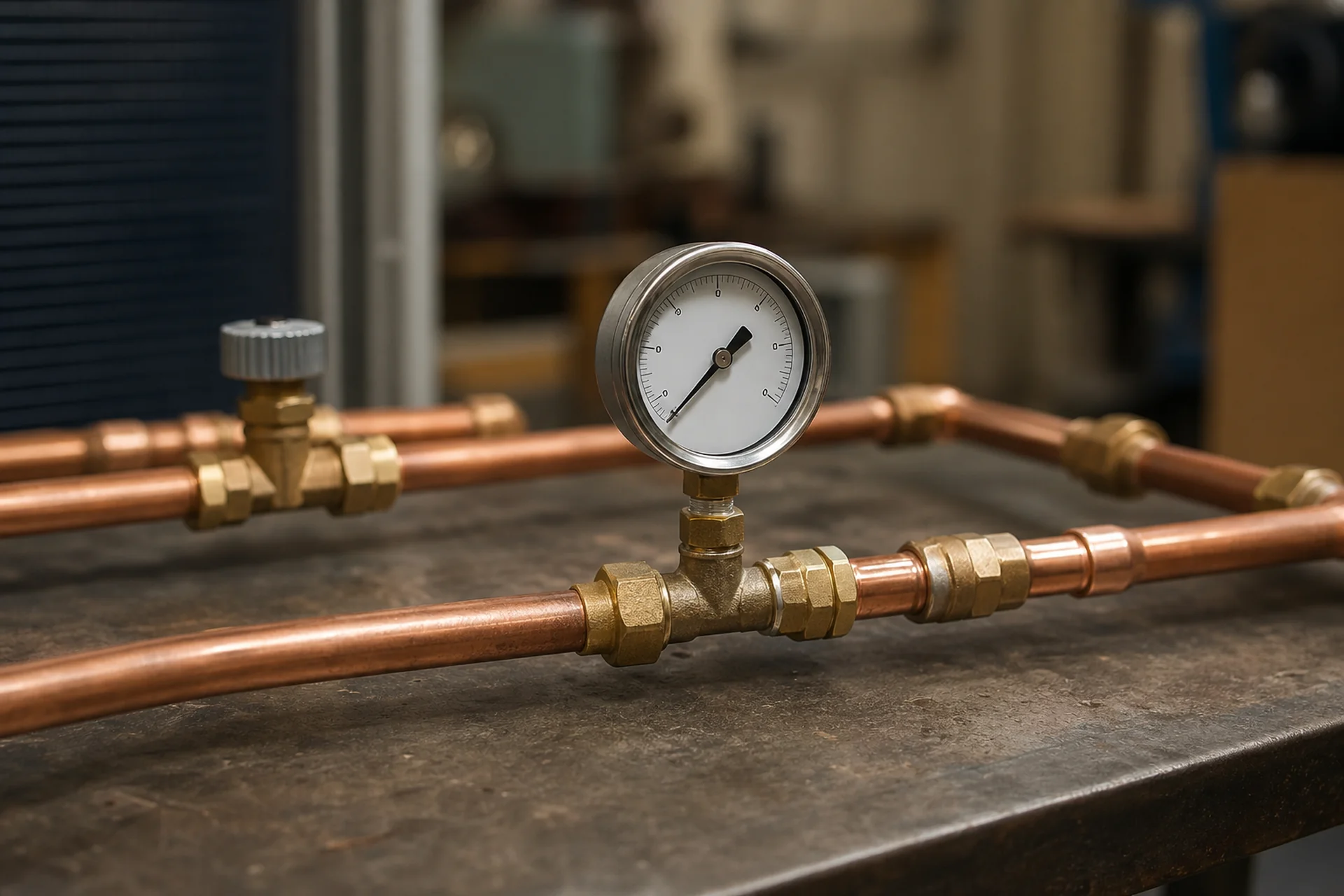
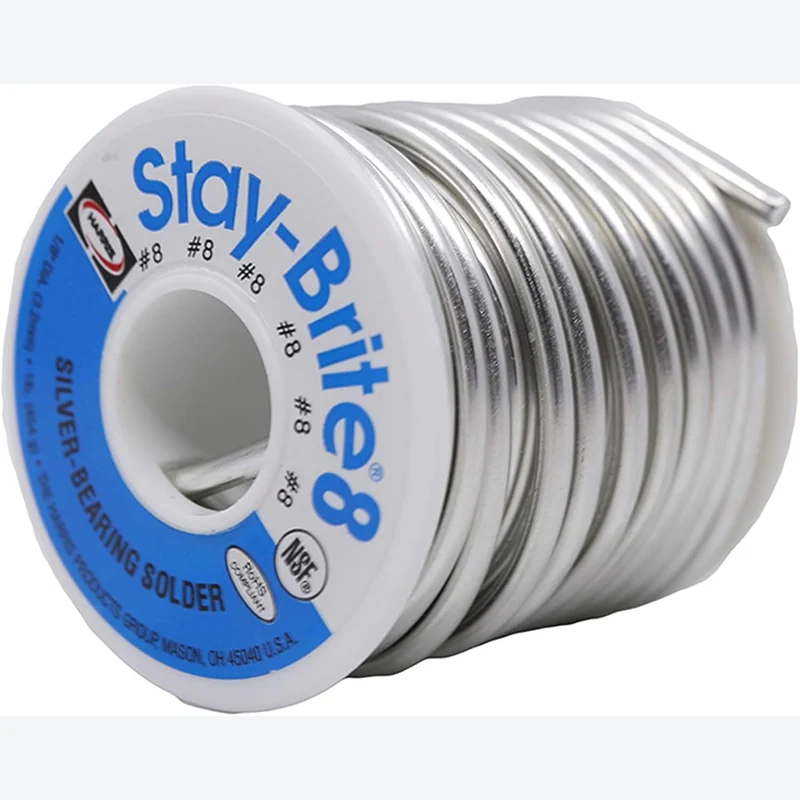
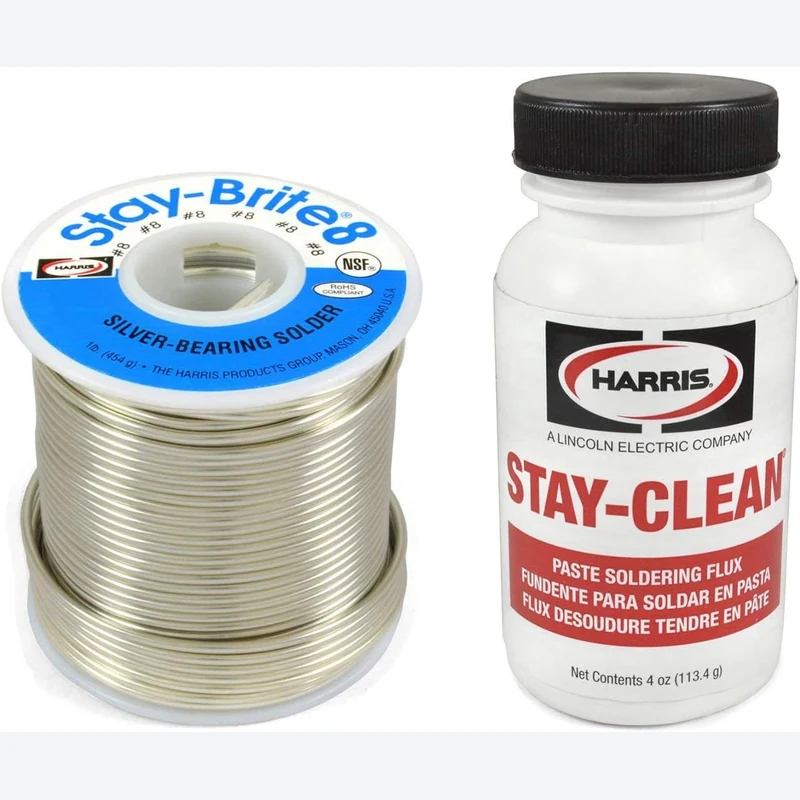
Pressure ratings on solder datasheets look abstract until a joint fails a standing nitrogen test at midnight on a supermarket rack. Stay-Brite 8 is specified for copper mechanical systems because laboratory tensile tests on fully wetted joints report values up to 10,000 PSI on copper — far above the working pressures seen in residential HVAC, plumbing, and most refrigeration circuits. This guide explains what that number measures, how workmanship affects real-world strength, and when soldering is the right join method versus brazing.
Review silver content for alloy chemistry, melting point for torch settings, and common problems when joints do not reach rated capacity.
What 10,000 PSI means
Tensile strength expresses how much pull stress a material withstands before fracture. Manufacturer testing on copper tube lap or butt specimens sweated with Stay-Brite 8 reports peak values near 10,000 PSI when the filler fully wets the joint land and solidifies without voids. That is the alloy and geometry performing together — not a guarantee that any joint on your truck reaches that figure without proper technique.
Compare to typical system pressures: residential water lines test around 80–100 PSI; HVAC nitrogen pressure tests often run 150–350 PSI depending on refrigerant and spec; even high-side refrigeration stays well below thousands of PSI. A joint rated an order of magnitude higher than operating pressure provides a safety margin for temperature cycling, vibration, and imperfect installation conditions.
Tensile versus working pressure
Do not confuse tensile lab values with ASME pressure ratings for fittings. The copper fitting and tube wall define system limits; solder fills the capillary gap and locks the assembly. Stay-Brite 8's role is to create a continuous metal bridge that does not creep or crack under service loads. When inspectors or engineers ask for lead-free mechanical joints, they want documentation that the filler metal meets strength and health criteria — NSF 51 for potable paths, RoHS for environmental compliance.
Hydrostatic and pneumatic tests prove the assembly, not the datasheet alone. Hold test pressure for the duration your spec requires, listen for leaks at ferrules and valves, and document results. A joint that passes a 300 PSI nitrogen hold on a 410A line set demonstrates adequate strength for that application even though the alloy could theoretically withstand far more in a controlled tensile coupon test.
Role of silver content
The 4% silver tin-silver alloy contributes to higher tensile values than plain tin solders on copper. Silver refines grain structure and improves resistance to creep — slow deformation under constant load — which matters on vibrating compressor lines and long horizontal runs. See our silver content guide for the metallurgy behind the percentage on the spool label.
Alloy choice cannot compensate for a cold joint. If the fitting never reached activation temperature, the tin-silver melt skins over before capillary action completes. The joint may look acceptable yet fail at a fraction of rated tensile. Heat the fitting uniformly, confirm flux activity, then feed solder until a full fillet appears at the cup mouth.
Capillary action technique
Capillary action draws molten filler into the gap between tube and fitting when clearance, temperature, and wetting are correct. Stay-Brite 8 flows at moderate heat — apply torch heat to the fitting body, move flame away briefly, touch solder to the joint mouth, and watch the melt get pulled inward. Chasing the joint with continuous flame overheats flux, burns tube, and produces brittle fills that test weak under pull.
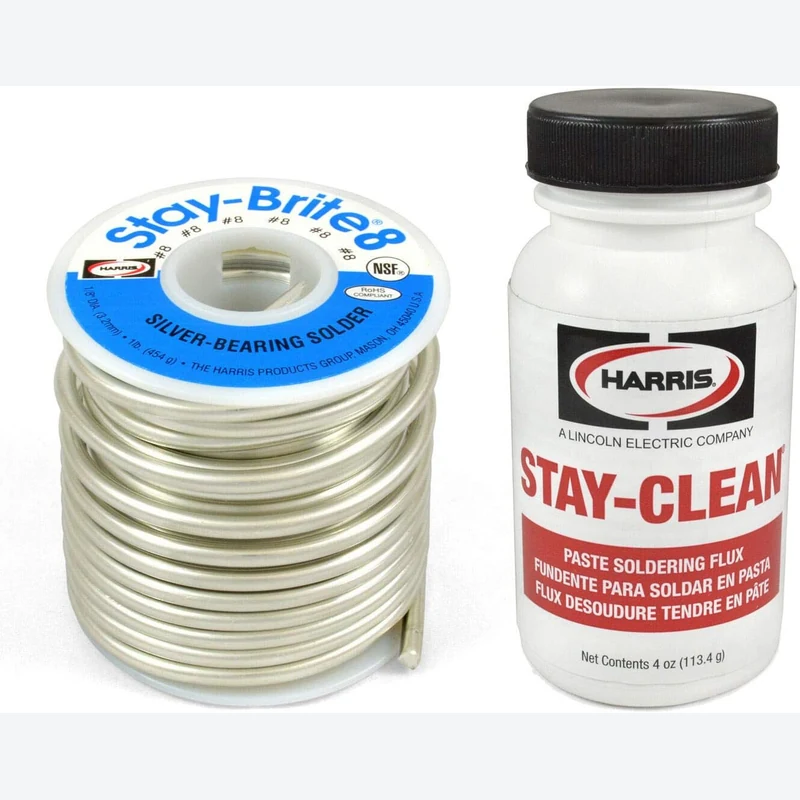
Proper land depth and reamed burr-free tube ends maximize capillary path length. Deburr with a clean reamer, apply Stay-Clean flux to both surfaces, insert tube to full depth, and support the assembly until cooldown. Do not blow on hot joints or quench with wet rags — rapid cooling can stress the fill and adjacent copper.
HVAC line-set applications
Residential and light commercial HVAC line sets are the most common pressure-rated use case. Sweat connections on suction and liquid lines must survive vibration from outdoor units and thermal expansion through wall penetrations. Stay-Brite 8's tensile margin covers these loads when joints are fully filled. Pair with nitrogen flow during sweating on open systems to limit internal oxidation.
After assembly, evacuate and leak-check before commissioning. Our HVAC applications page walks through line-set prep, torque on flares versus sweat, and when to step up to brazing for larger commercial pipe. For typical split-system diameters, soldered joints with this alloy are industry standard when codes allow.
Refrigeration rack piping
Supermarket and process refrigeration racks carry larger pipe and higher consequence of failure. Specifiers choose Stay-Brite 8 for lead-free copper runs where brazing is overkill and plain tin is under-strength. Rack builders pressure-test long stretches before charging; a single weeping sweat can delay entire commissioning schedules. Full-penetration joints with matched flux reduce rework.
Oil return lines and hot-gas defrost circuits see temperature swings. Tin-silver joints resist thermal fatigue better than high-tin alternatives. Document alloy and flux lot numbers for QA logs if your customer requires traceability. Details on rack workflows live on our refrigeration page.
Plumbing pressure tests
Domestic water installations pressure-test before drywall closes. Municipal inspectors expect NSF 51–listed materials on potable copper. Stay-Brite 8 meets that requirement while delivering tensile strength that exceeds test pressures by wide margins. Flush lines after soldering to remove flux residue per local code.
Branch takeoffs and fixture connections accumulate many joints per rough-in. Consistent technique across dozens of cups matters more than any single impressive tensile number. Train apprentices on capillary timing before they work overhead in joist bays where rework is expensive.
When joints underperform
Joints that fail below expectations usually share root causes: insufficient heat, contaminated surfaces, wrong flux, or movement during solidification. Grainy or dull fillets signal poor wetting. See common soldering problems for corrective steps. Cutting out and resweating is faster than chasing leaks after drywall and commissioning.
Oversized gaps from out-of-round tube or mismatched fitting tolerances cannot be filled by piling solder on the exterior. The capillary path must be correct. Measure tube OD and fitting ID; reject fittings that feel loose before flux hides the fit.
Solder versus brazing
Brazing uses higher temperatures and different filler metals for larger pipe and higher design pressures in some commercial specs. Stay-Brite 8 occupies the low-temperature mechanical soldering niche: faster than brazing on small diameters, stronger than plain tin, lead-free for regulatory compliance. If your engineer's spec explicitly calls for BCuP brazing alloy on a given joint, follow the spec — do not substitute solder based on tensile marketing alone.
For the majority of HVAC service and plumbing rough-in, soldered joints with documented tensile performance are code-accepted and field-proven. Carry the right alloy, flux, and torch tips so you are not tempted to stretch plain tin into applications it was never meant to hold.
Field checklist
Before heat: deburr, clean, flux both surfaces, full insertion depth. During heat: fitting-focused flame, flux clears, solder feeds by capillary pull. After cooldown: visual fillet inspection, wipe excess flux, pressure-test per spec. Documentation: note alloy type Stay-Brite 8, NSF 51 where required, test pressure and hold time.
The 10,000 PSI tensile figure is a ceiling demonstrated under ideal conditions. Your job is to approach that ceiling on every cup through disciplined technique — the alloy already did its part in the metallurgy lab.