
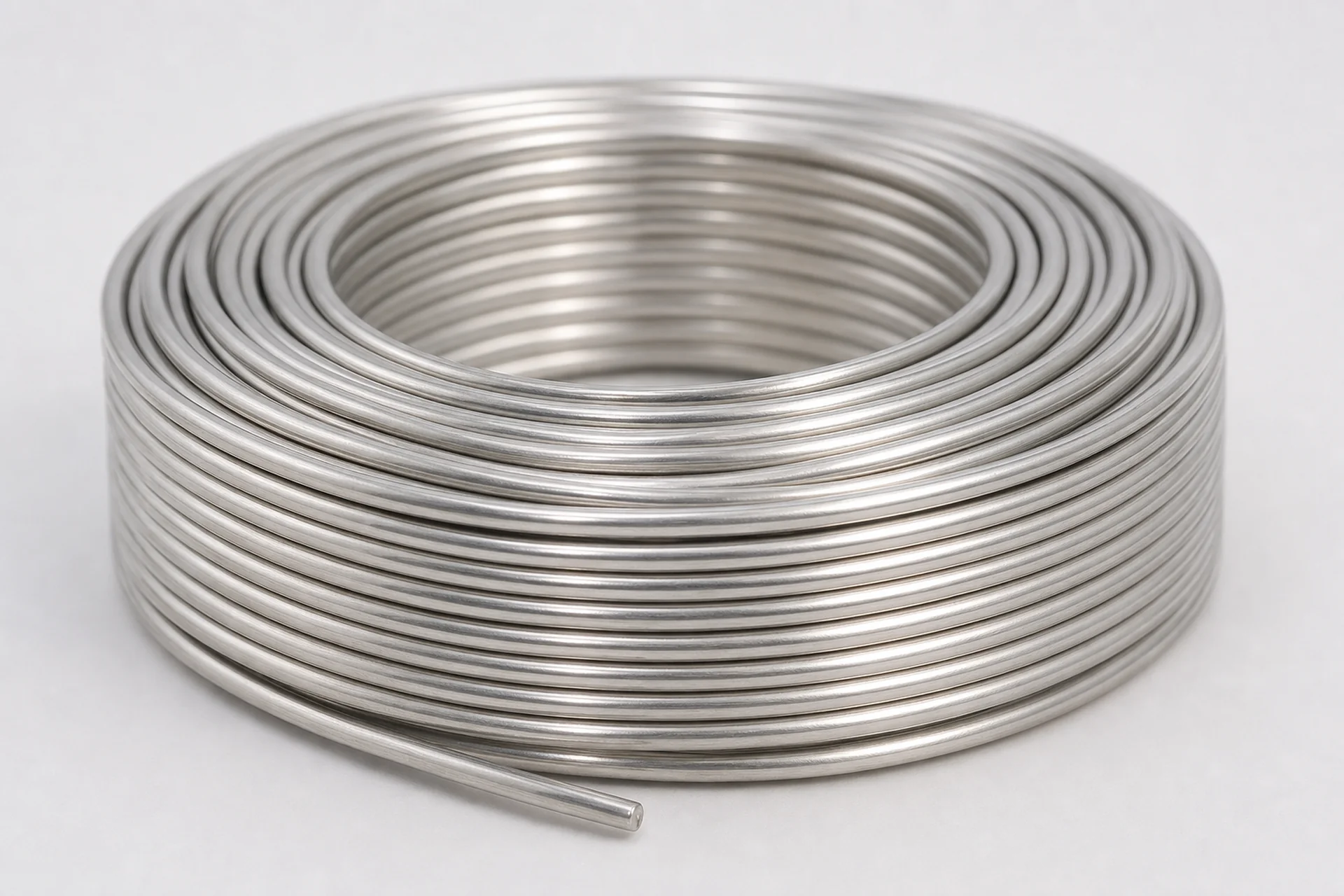
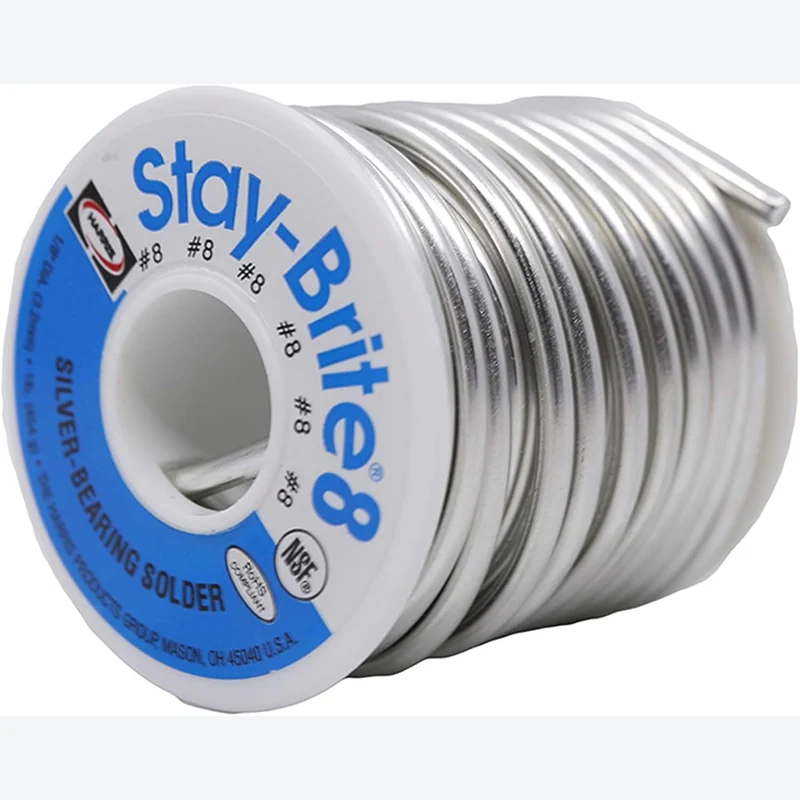
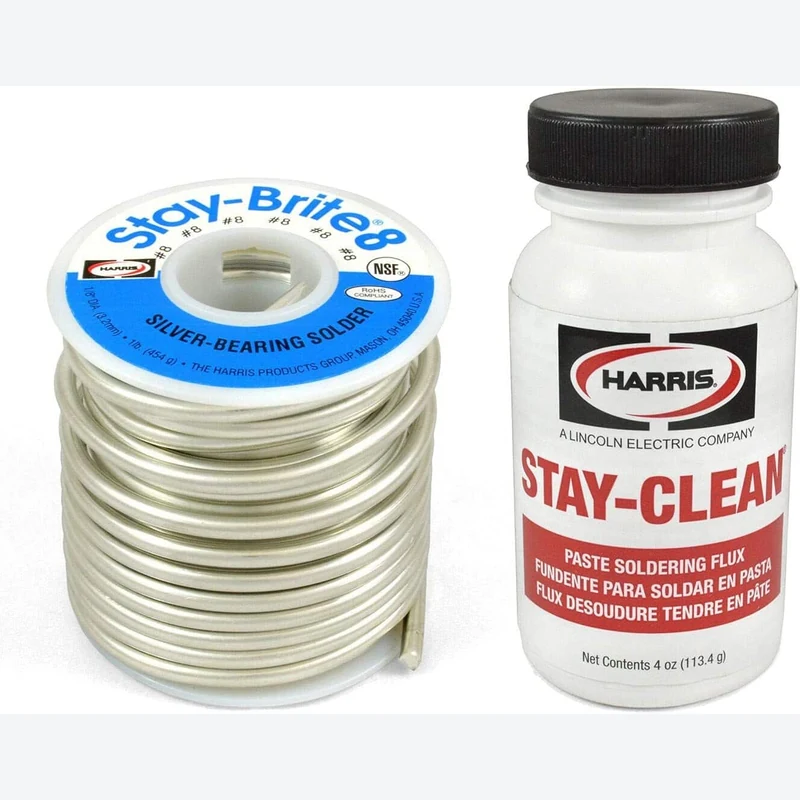
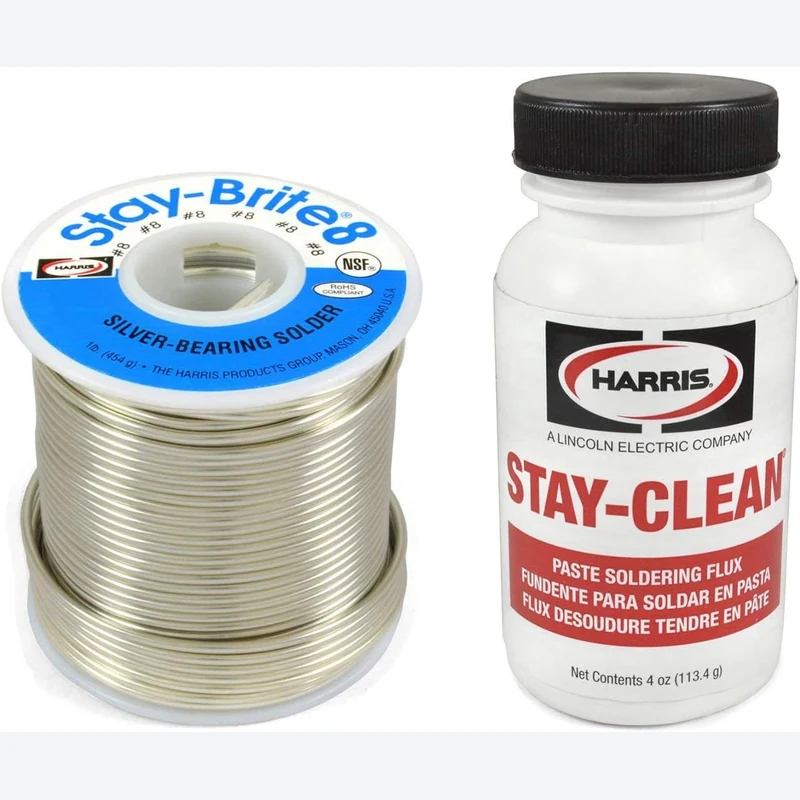
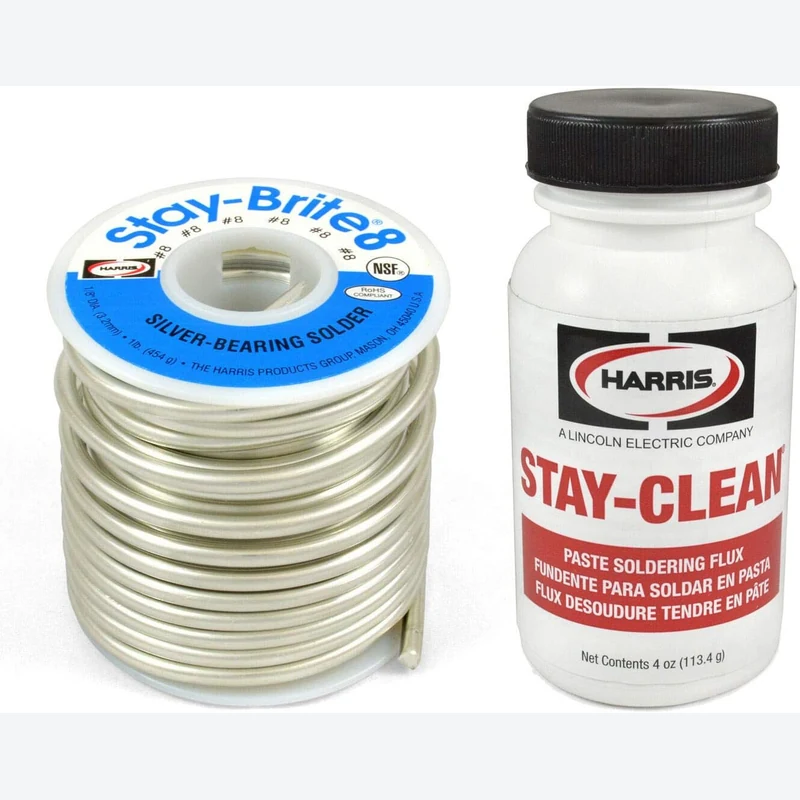
Silver content is the single number that separates a premium lead-free solder from commodity tin wire. Stay-Brite 8 is formulated as a tin-silver alloy with approximately 4% silver by weight — enough to materially change how the filler metal wets copper, resists creep under vibration, and survives thermal cycling in HVAC and refrigeration lines. This guide explains what that percentage means in practice, how it compares to plain tin solder, and why alloy chemistry matters more than marketing labels on the spool.
Pair this page with our pressure rating guide for tensile strength data, the melting point page for working temperature ranges, and Stay-Clean flux pairing for the activation steps that let the alloy flow by capillary action.
What 4% silver means
In metallurgical terms, Stay-Brite 8 is a tin-silver eutectic-near alloy. Roughly 96% tin and 4% silver form a homogeneous filler metal that melts in a narrow band around 535–550°F. The silver atoms dissolve into the tin matrix and alter grain structure at the joint interface. You are not sprinkling silver on top of tin — the two metals are alloyed throughout the wire cross-section from the factory spool to your torch tip.
Four percent is a deliberate balance. Lower silver percentages behave closer to plain tin solder: adequate for light-duty work but prone to fatigue in vibrating line sets. Higher silver alloys exist for specialized electronics, but they cost more and can raise working temperatures beyond what HVAC technicians prefer. Stay-Brite 8 targets the sweet spot for copper plumbing, refrigeration, and mechanical tubing where joints must hold pressure and survive decades of temperature swings.
Tin-silver alloy chemistry
The tin-silver system is well documented in soldering handbooks. Silver increases the solidus and liquidus temperatures slightly above pure tin while improving wetting on oxidized copper surfaces when proper flux is present. Stay-Brite 8 remains lead-free and RoHS compliant, which matters for potable water systems, food-zone refrigeration, and jurisdictions that ban lead-bearing solders outright.
Because the alloy is homogeneous, you cannot "dilute" silver content by overheating or re-melting scrap. What leaves the spool is what enters the joint. Store spools away from moisture and contamination so the surface oxide layer stays thin. Clean tubing and use Stay-Clean flux so the tin-silver melt contacts fresh copper — that is where capillary action pulls alloy into the fitting cup.
Strength on copper joints
Silver-bearing solders develop higher tensile strength on properly sweated copper than 50/50 tin-lead or pure tin alternatives. Stay-Brite 8 joints on copper tube and fittings routinely test well above typical system working pressures when the fill is complete and the land area is fully wetted. Our pressure rating page documents values up to 10,000 PSI tensile on copper under controlled test conditions — a figure that explains why refrigeration and HVAC contractors specify this alloy for critical line sets.
Strength is not only about the number on a datasheet. A partial joint with voids fails far below rated capacity regardless of alloy. The 4% silver formulation flows smoothly at moderate heat, which helps technicians achieve full penetration without overheating thin-wall tubing. Heat the fitting, not the solder wire, and let capillary action draw the tin-silver melt into the joint gap.
NSF 51 and potable water
Plumbers choosing lead-free solder need more than a RoHS sticker. NSF 51 certification signals that the alloy and flux system meet health-effects criteria for materials in contact with drinking water. Stay-Brite 8 is used on potable copper lines where code inspectors ask for documentation. The 4% silver tin-silver composition does not introduce lead, and when paired with approved flux and proper flushing procedures, it satisfies the expectations of most North American plumbing jurisdictions.
Always verify local amendments — some municipalities require specific listed products for domestic water. Keep lot traceability from your distributor in case an inspector requests manufacturer data sheets. For dedicated potable work, see our plumbing applications page for joint prep and pressure-test workflows.
Versus plain tin solder
Plain tin or high-tin solders melt at lower temperatures and cost less per ounce. They work for electrical or non-pressurized crafts. On pressurized copper, the trade-off shows up in creep and vibration resistance. Plain tin joints can loosen over years of compressor vibration or thermal expansion in attic line sets. The silver fraction in Stay-Brite 8 stiffens the joint microstructure without jumping to brazing temperatures that risk annealing thin copper tube.
Technicians who switch from 50/50 lead-tin often comment that Stay-Brite 8 feels "tighter" under the torch — slightly higher working heat but cleaner flow once flux activates. The learning curve is short if you respect capillary technique: stable heat on the fitting, brief wire touch, withdraw and watch the meniscus pull into the cup.
Silver and corrosion resistance
Copper systems face moisture, flux residues, and — in refrigeration — trace refrigerant oils. Silver-bearing tin alloys resist filiform corrosion and surface tarnish better than some low-cost substitutes. That does not eliminate the need to wipe excess flux or protect exposed joints in harsh environments, but the joint metal itself stays structurally sound longer when the alloy composition is consistent.
In coastal HVAC installations or humid mechanical rooms, joint longevity depends on both alloy choice and workmanship. A 4% silver fill with complete wetting outperforms a visually acceptable plain-tin joint that hides micro-voids under a shiny meniscus. Inspect joints after cooldown and reheat only when necessary — repeated thermal cycles can embrittle nearby copper if you chase a cosmetic fix.
Flux pairing matters
Alloy chemistry is half the system. Stay-Clean flux is formulated to match Stay-Brite 8 activation temperature and copper oxide removal rate. Mismatched flux — too aggressive or too weak — produces grainy joints that look silver-rich but fail under pressure. Apply a thin, even coat inside the fitting and on the tube land, assemble, then heat until flux clears before touching solder to the joint mouth.
Paste flux variants exist for vertical or overhead work where liquid runs. Our flux guide compares liquid and paste options. Never skip flux on copper; the 4% silver alloy cannot wet oxidized surfaces by itself no matter how skilled the torch work.
Choosing spool size
The alloy is identical whether you buy a 1 oz field spool or a 4 oz shop spool. Choose by consumption rate and portability. Service techs carrying line-set repair kits prefer the smaller spool; shop fabricators running daily production benches stock the larger reel. Kits bundle solder with flux so new crews start with a matched system rather than mixing brands.
Wire diameter affects heat input per pass. Common HVAC and plumbing diameters feed quickly into 1/2-inch and 3/4-inch cups without flooding the joint. Practice on scrap fittings until the tin-silver meniscus flashes bright and smooth — that visual cue means the 4% silver alloy has fully wetted the land.
Application summary
HVAC: Line sets, driers, and control tubing benefit from vibration-resistant tin-silver joints. Refrigeration: Process and supermarket racks specify lead-free alloys with documented strength. Plumbing: NSF 51–listed work on potable copper. Aluminum: Use dedicated aluminum formulations — the 4% silver copper alloy is not interchangeable; see our aluminum page for the correct product.
When in doubt, read the spool label for silver percentage and confirm RoHS and NSF listings with your supplier. Stay-Brite 8's 4% tin-silver chemistry is the foundation for every product card on this site — same alloy, different packaging for the trade you serve.