
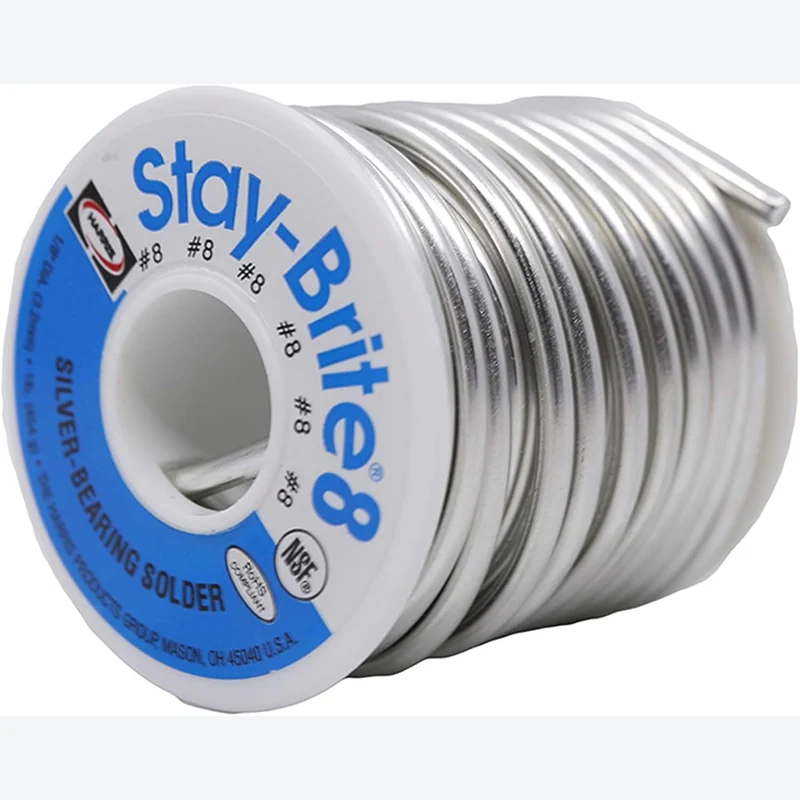
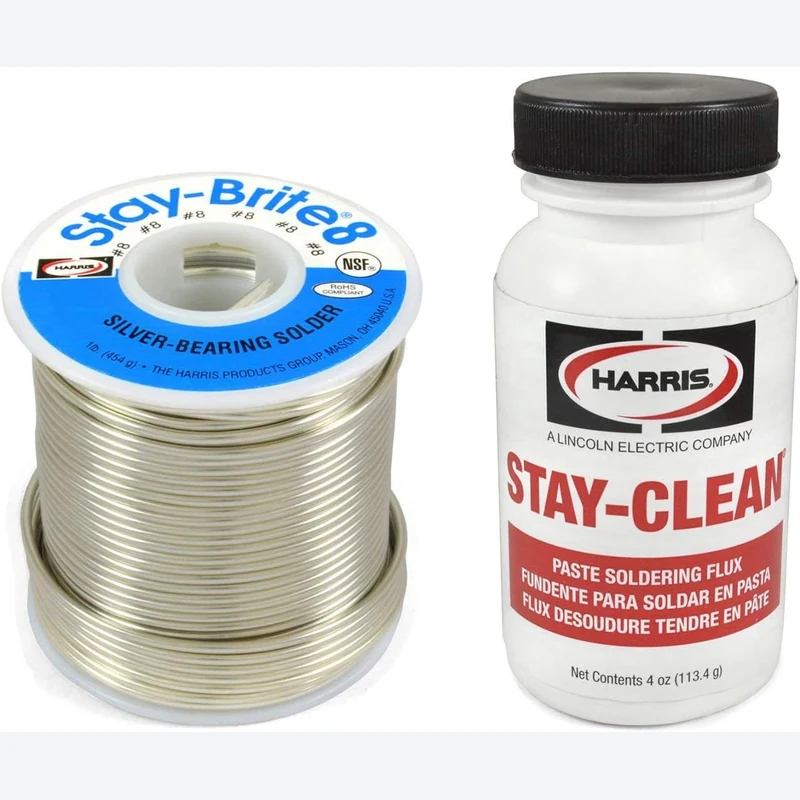
Potable water systems demand solder that will not leach lead and joints that hold through decades of pressure cycling. Stay-Brite 8 answers both requirements — a premium tin-silver alloy that is fully lead-free, NSF 51 food service listed, and measurably stronger on copper than standard tin-based solders still sold in big-box plumbing aisles.
Plumbers who upgrade from 50/50 or generic lead-free wire notice the difference in flow behavior and fillet strength. This page explains where Stay-Brite 8 fits in rough-in and repair work, how its melting range handles imperfect fits, and why flux selection matters as much as the wire itself.
Lead-free potable lines
Modern plumbing codes require lead-free alloys on potable paths. Stay-Brite 8 exceeds that baseline with higher silver content and RoHS compliant chemistry. The NSF 51 listing matters for inspectors and commercial jobs where documentation is part of closeout packages. You are not just avoiding lead — you are specifying an alloy with published strength data on copper.
Tensile strength reaches roughly 10,000 PSI on copper when joints are properly prepared. That headroom matters on mixed hot-and-cold runs where thermal expansion stresses fittings over years. The alloy melts across a 535–550°F range, not a single eutectic point, which helps fill slightly looser cup joints common in field-assembled couplings.
Copper rough-in work
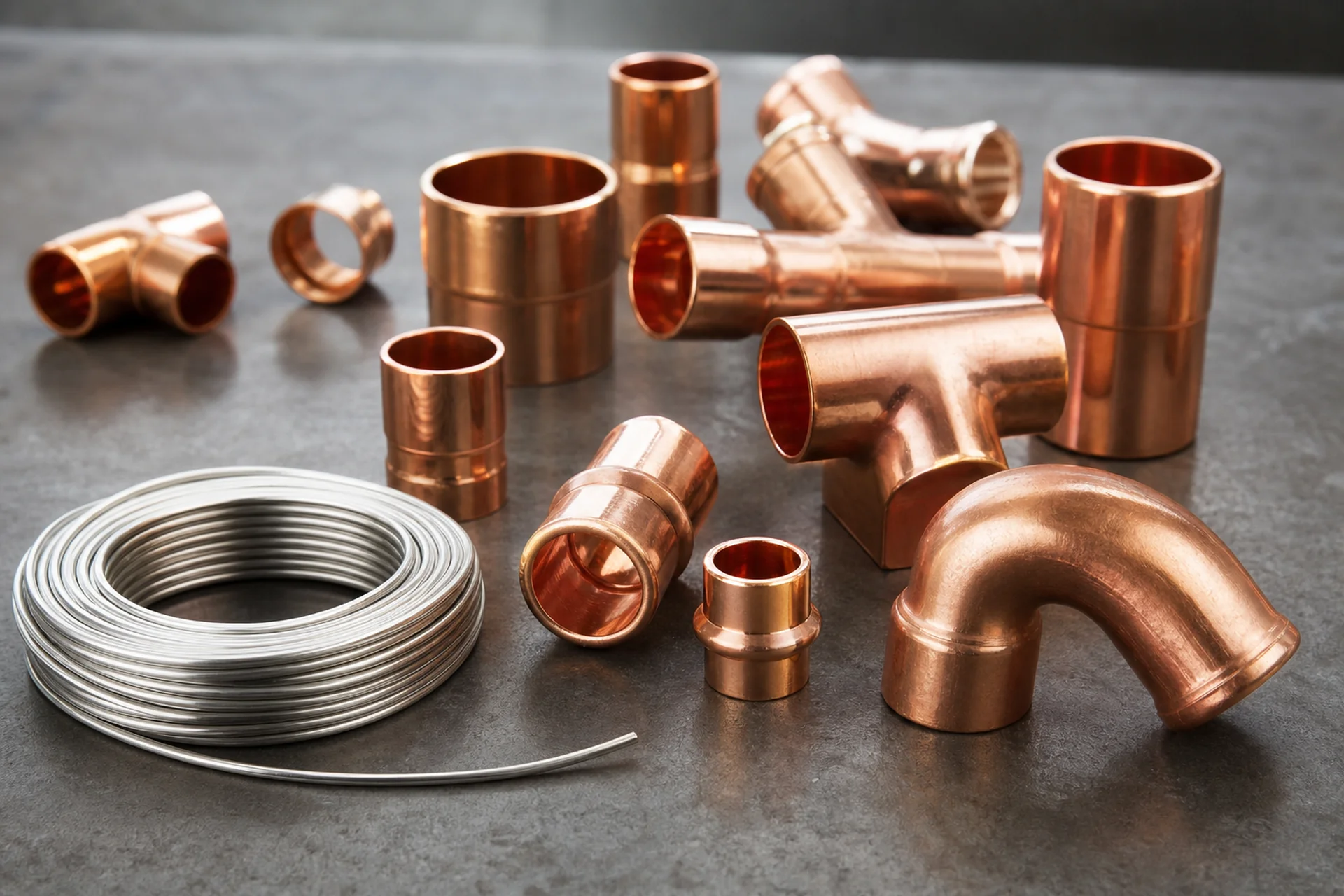
Type M and Type L copper dominate residential plumbing. Stay-Brite 8 pairs with standard propane or MAP torches on 1/2-inch and 3/4-inch sweat joints. Ream every cut, deburr the ID, and abrade mating surfaces until bright — skipping prep is the main cause of callbacks, not alloy choice. Apply flux thinly, assemble, heat the fitting body, and feed solder until a full ring appears at the cup mouth.
Wider clearance joints — slightly out-of-round tubing or worn couplings — benefit from Stay-Brite 8's paste-phase flow. Pure tin solders freeze before filling the gap; the silver-bearing range keeps molten metal mobile long enough to bridge minor imperfections. That forgiveness saves time on renovation work where old tubing is not perfectly round.
Brass stops and valves
Angle stops, compression-to-sweat adapters, and ball valves with brass bodies solder reliably when fluxed and pre-heated evenly. Brass conducts heat differently than copper — spend extra seconds heating the body before introducing wire. Stay-Brite 8 wets brass without the zinc fumes associated with overheating galvanized adapters mistakenly left in the line.
Fixture connections behind walls should be pressure-tested before close-in. Many plumbers nitrogen-test or hydrostatic-test new runs regardless of solder brand — Stay-Brite 8 joints hold when the procedure follows standard IPC practice.
Steel and stainless tie-ins
Commercial kitchens and mixed-material runs sometimes require steel or stainless connections near copper mains. Stay-Brite 8 bonds to steel and stainless with adequate surface prep and compatible flux. Expect longer heat cycles and a duller fillet appearance compared to bright copper joints — function matters more than cosmetics in mechanical rooms.
Dielectric unions still belong wherever galvanic corrosion is a documented risk. Solder bridges dissimilar metals only when the design calls for a permanent joint — do not replace engineered isolation with convenience solder.
Flux for wet areas
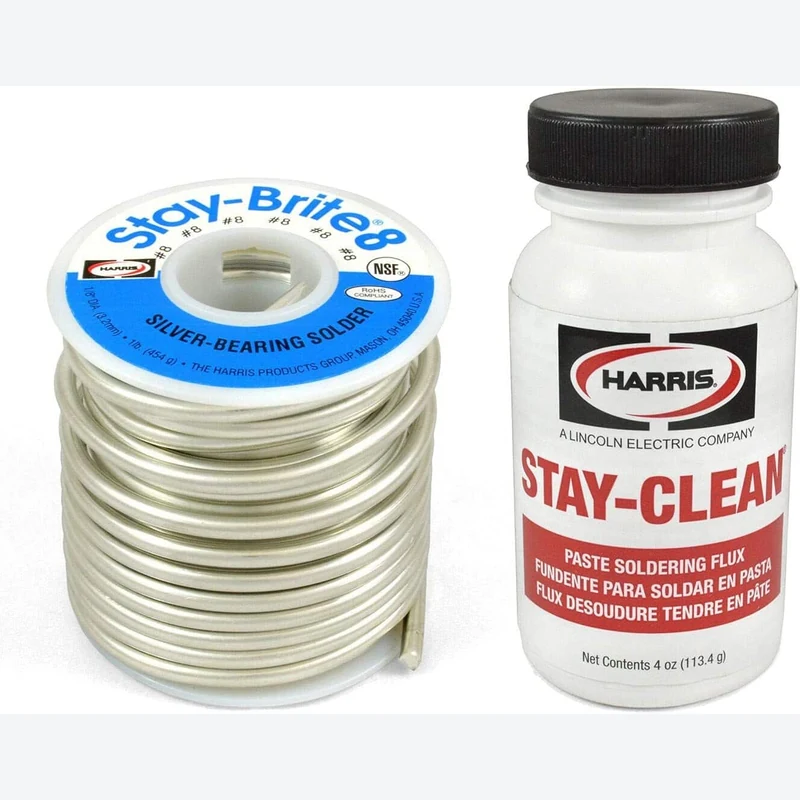
Stay-Clean liquid flux is the default for horizontal runs and accessible joints. Rinse or wipe residue before pressurizing potable lines — flux left inside pipe walls can affect water taste and promote pitting over time. Paste flux earns its place on vertical stacks in tub surrounds and shower walls where liquid would run off before heating.
Never use leftover HVAC or electronics flux on potable copper. Acid strength and rinse requirements differ by formulation. Match flux to Stay-Brite 8 per the manufacturer's pairing guidance on our solder and flux page.
Versus standard solders
Standard Stay-Brite and generic lead-free wires work on tight, well-fitted cups in controlled shop conditions. Stay-Brite 8 adds silver for strength and uses a broader melting range for field tolerance. The tradeoff is cost per foot — justified on jobs where joint integrity outweighs a few dollars of material difference across a whole house rough-in.
Lead-bearing 50/50 solder should be eliminated from plumbing kits entirely. Even on non-potable branches, lead wire creates cross-contamination risk when apprentices grab the wrong spool. Standardizing on Stay-Brite 8 simplifies truck inventory and training.
Repair and service calls
Service plumbers love the 1 oz spool for pinhole repairs and stop replacements. Drain the line, sand the defect, flux, and build a solder patch or replace the affected fitting. Stay-Brite 8's lower melting range versus brazing means you can work closer to finished surfaces with a heat shield — useful in occupied homes with tight vanity spaces.
For chronic pinholes in aging Type M systems, counsel homeowners on sectional replacement versus repeated patches. Solder fixes symptoms; metallurgy and water chemistry often drive recurrence.
Inspection and documentation
Keep alloy labels and NSF documentation in job binders for commercial work. Inspectors increasingly ask about lead-free verification on potable paths. Stay-Brite 8's published listings shorten that conversation compared to unmarked bulk wire from trade-show booths.
Photograph representative joints on large projects if your QC program requires it. A uniform fillet profile around the cup mouth is the visual sign of full capillary pull — flat or balled solder at the entry point usually indicates incomplete fill.
Avoiding common failures
Cold joints, overheated flux, and wet interior surfaces cause most plumbing solder failures. Always dry fittings before heating — steam in the cup blocks alloy flow. Heat the fitting, not the wire. If solder will not pull in, stop, disassemble, re-clean, and retry rather than building a lump on the outside.
See our problems guide for diagnostic photos and fixes. For melting behavior detail, visit melting point and pressure rating pages.
What to stock
Rough-in crews should carry a 4 oz spool, Stay-Clean flux, paste flux for vertical work, and the plumbing kit as a backup SKU for apprentices. Service vans benefit from the 1 oz pocket spool plus a small flux bottle secured upright. Label everything — Stay-Brite 8 looks similar to other silver wires but performs differently than lower-temperature alloys.
Pair with quality tube cutters, deburring tools, and heat shields for tight cabinet work. The alloy does the easy part once preparation and heat discipline are correct — most plumbing callbacks trace to procedure, not chemistry.