
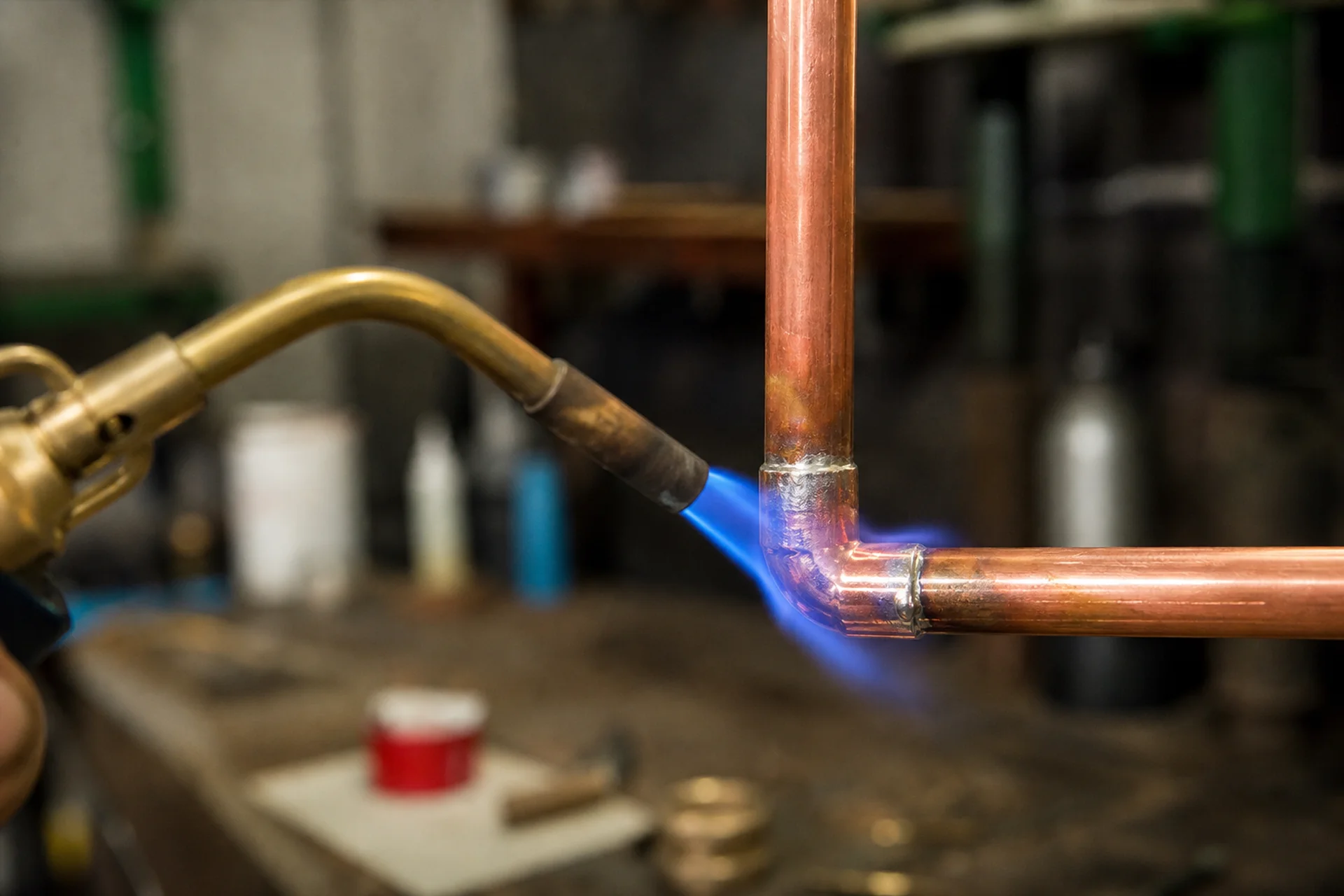
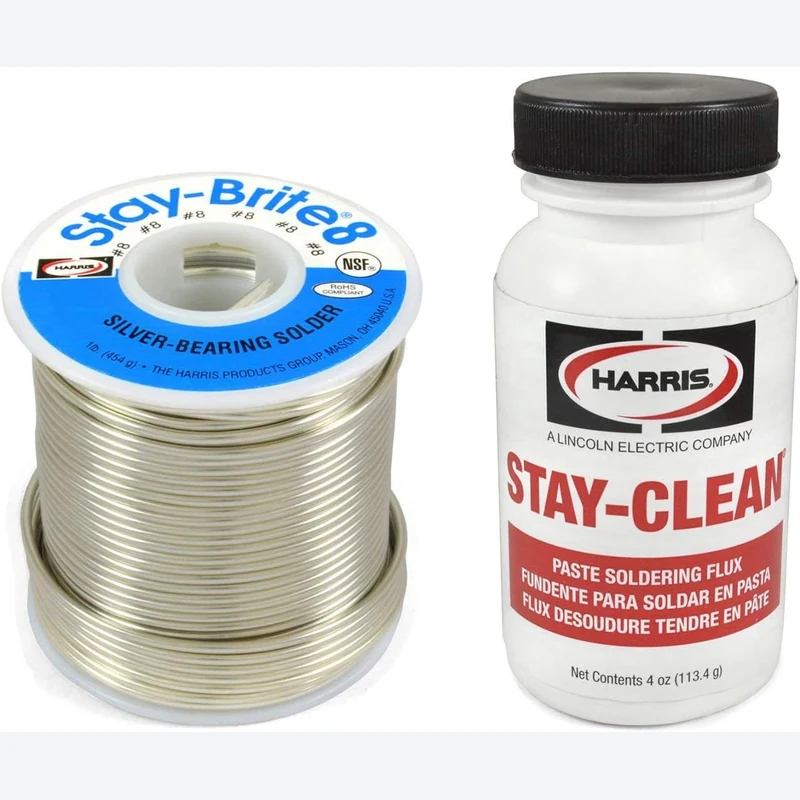
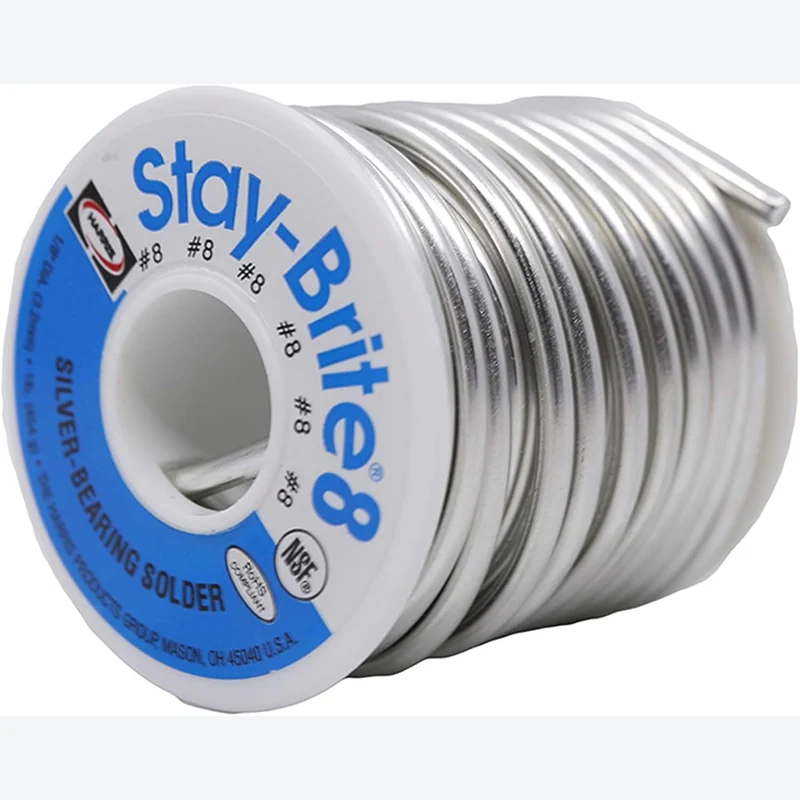
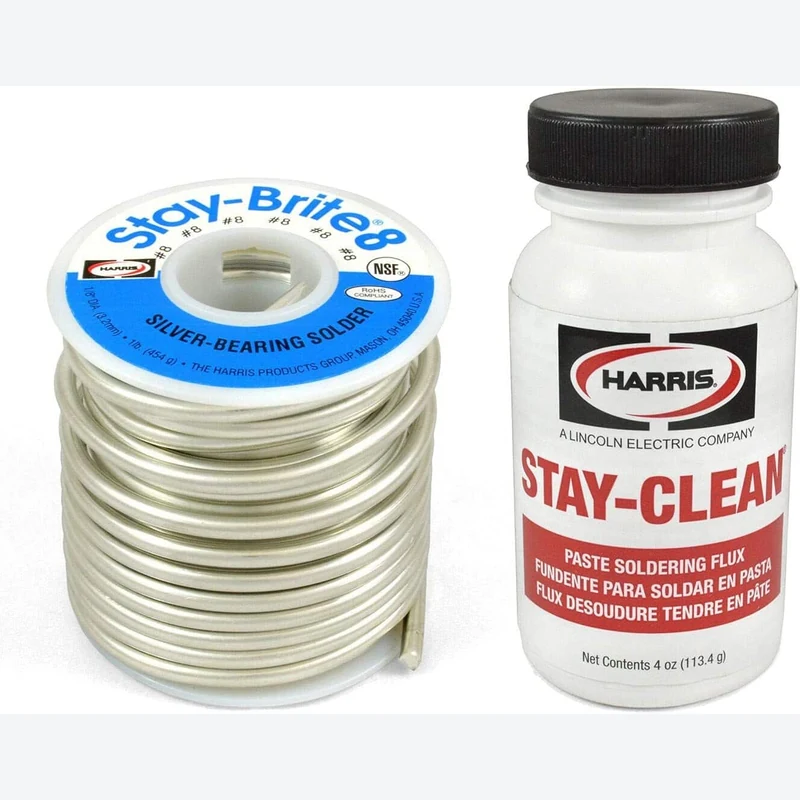
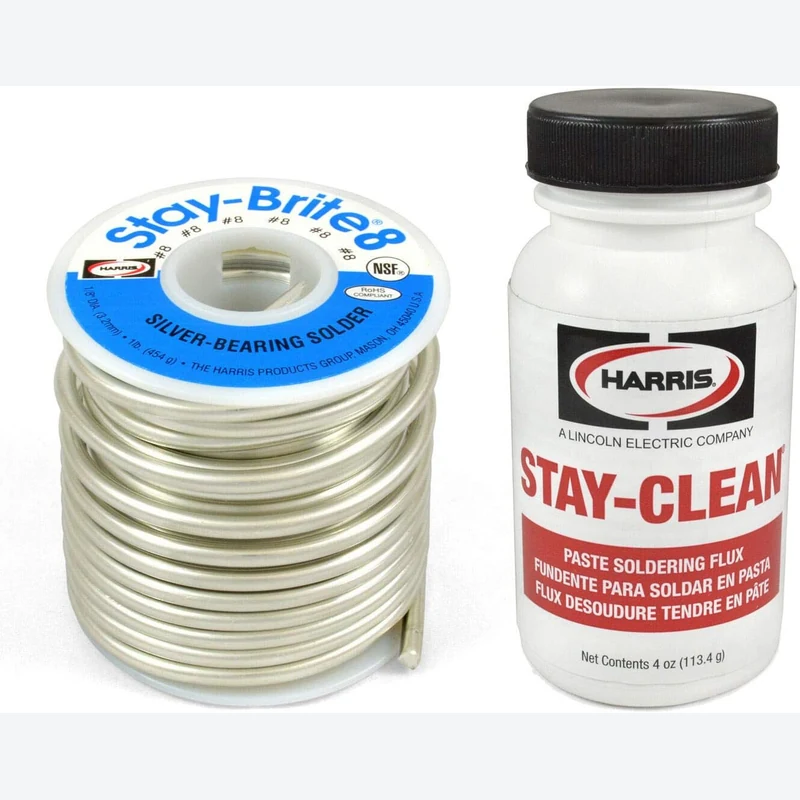
Melting point is the number you set your torch technique against. Stay-Brite 8 — a lead-free tin-silver alloy with 4% silver — melts and flows in a narrow band between 535°F and 550°F. That window sits above plain tin solders but well below brazing temperatures that anneal thin-wall copper and damage nearby valves or insulation. Understanding this range helps HVAC techs, plumbers, and refrigeration fitters heat the fitting — not flood the joint — and let capillary action pull alloy into the cup.
Cross-reference silver content for alloy makeup, flux pairing for activation timing, and troubleshooting when joints overheat or stay cold.
The 535–550°F window
Solder alloys do not melt at a single instant like ice. They pass through a plastic range between solidus and liquidus temperatures. Stay-Brite 8 is formulated for a tight range around 535–550°F so technicians get quick flow without prolonged heat on the joint. Prolonged heat drives flux burnout, tube discoloration, and warped fittings — especially on 1/4-inch and 3/8-inch refrigeration lines.
In field terms: when flux sizzles clear and copper shows a dull cherry near the cup, you are approaching the working window. Touch solder to the joint mouth; if it melts on contact and wicks inward, the assembly is in range. If wire balls up on the tube without flowing, the fitting is still too cool or the surface is contaminated.
Solidus and liquidus
Metallurgists distinguish solidus (where alloy first softens) from liquidus (where it is fully molten). Stay-Brite 8's tin-silver composition keeps that spread small — a benefit for capillary joints because the filler transitions to full flow quickly once the fitting absorbs enough heat. Wide-range solders linger semi-solid and trap voids if you move the torch too soon.
You do not need a pyrometer on every joint. Experienced techs read flux behavior and solder wetting. Trainees should practice on scrap fittings with the same torch tip they carry on service trucks — MAP-pro, propane, or air-acetylene tips each deliver different heat density at the cup.
Versus brazing temperatures
Brazing copper typically requires filler flow above 1,100°F with BCuP or similar alloys. That heat anneals thin tube, melts nearby soldered joints if you are not careful, and damages rubber grommets on line-set penetrations. Stay-Brite 8's 535–550°F range lets you sweat connections on charged-adjacent assemblies with heat shields and wet rags where policy allows — still follow your company safety rules on open flame near refrigerant.
Choose solder when code and engineering permit low-temperature joins on the pipe size you are running. Step up to brazing when the spec mandates it for design pressure or pipe diameter. The melting point page is your guide for the solder side of that decision.
Torch selection tips
MAP-pro and modern propane tips reach the Stay-Brite 8 window fast on 1/2-inch and 3/4-inch fittings. Use a neutral flame — excess acetylene carbonizes flux. For tight spaces, smaller tips reduce the risk of overheating the tube body while the cup is still cold. Rotate heat around the fitting shoulder so the entire cup reaches activation before you feed wire.
Air-acetylene pencils offer fine control on refrigeration stubs and drier connections. Keep flame motion steady; pulsing too aggressively cycles copper through temperatures that oxidize faster than flux can clean. If insulation begins to char on nearby line sets, pull heat back and use a heat sink clip on the run.
Flux activation timing
Stay-Clean flux is matched to the alloy melt point. It should bubble, then go quiet and transparent as oxides lift — that visual cue precedes solder flow by seconds. Applying solder before flux activates produces grainy cold joints. Waiting too long after flux clears burns the chemistry and reverses wetting. The 535–550°F band is narrow enough that timing discipline matters on every cup.
Paste flux on vertical or overhead work reduces drip while preserving the same activation curve. Brush a thin coat; thick paste insulates metal and delays heat transfer. Compare liquid and paste workflows on our flux page.
Capillary heating method
The capillary action heating technique means you conduct heat into the fitting mass so the internal cup melts solder drawn from the outside. Do not melt a large ball on the tube and hope it falls into the gap. Hold flame on the fitting, remove it, touch wire to the joint interface, and let molten tin-silver get pulled into the capillary path by surface tension and wetting forces.
On horizontal runs, apply solder at the top of the joint mouth so flow traces around the circumference. On vertical rises, start at the bottom and work up to avoid trapping flux inclusions. A full fillet ring at the exit means you likely captured the entire land depth.
Copper tube considerations
Thin-wall ACR tube heats faster than thick Type L plumbing pipe. Adjust dwell time so you reach 535–550°F at the cup without glowing the tube. Overheated copper turns dark and grainy; solder may flow but base metal strength drops. If tube discolors before solder wicks, use a larger tip at lower proximity or pre-warm the run gradually.
Cold outdoor installs in winter pull heat from joints faster. Shelter the work area, preheat the fitting longer, and keep solder wire warm in your pocket so feed rate stays consistent. Indoor mechanical rooms with airflow over open joists mimic winter conditions — draft shields help.
HVAC and refrigeration
Line sets and rack headers benefit from Stay-Brite 8's moderate melt point because nearby service valves and Schrader cores tolerate the heat envelope better than brazing. Still use wet rags and directional flame on valve bodies. After sweating, allow natural cooldown — quenching shocks the tin-silver fill. Pressure-test per spec before wrap and strap.
Process piping with oil residue needs clean tube and fresh flux. Oil shifts local wetting and can push effective melt behavior above 550°F at contaminated spots while clean copper flows early — resulting in uneven fills. Wipe cuts, deburr, and never reuse old flux on critical rack joints.
Plumbing rough-in notes
Plumbers running NSF 51–listed Stay-Brite 8 on potable lines appreciate the lower heat compared to brazing when working close to plastic stub-outs and valve packing. Maintain the 535–550°F discipline even when production pressure pushes you to overheat for speed. Cold joints discovered at trim-out cost far more than an extra thirty seconds per cup during rough-in.
After cooldown, flush lines to remove flux per local code. Melting point knowledge does not replace inspection — visual fillet checks and hydrostatic holds confirm that the alloy actually flowed while the metal was in range.
Avoiding common mistakes
Feeding too much wire floods the cup and drops temperature below flow point. Moving flame onto wire instead of fitting creates external blobs. Reheating completed joints to "shine them up" exceeds 550°F locally and can remelt only the surface while leaving voids inside. If a joint fails inspection, cut it out rather than layering heat.
Our problems guide maps symptoms to fixes. The melting point is correct on the spool; technique determines whether your assembly ever sees that temperature at the capillary gap.
Quick reference
Alloy: Stay-Brite 8 tin-silver, 4% silver, lead-free, RoHS compliant. Flow range: 535–550°F. Flux: Stay-Clean liquid or matched paste. Method: Heat fitting, capillary feed, natural cool. Not for: Aluminum — use aluminum-specific products with their own melt windows.
Tape this workflow to your torch cart until the visual cues become automatic: flux clears, wire wicks, fillet rings, flame off. The alloy does the chemistry; your heat control delivers the temperature.