
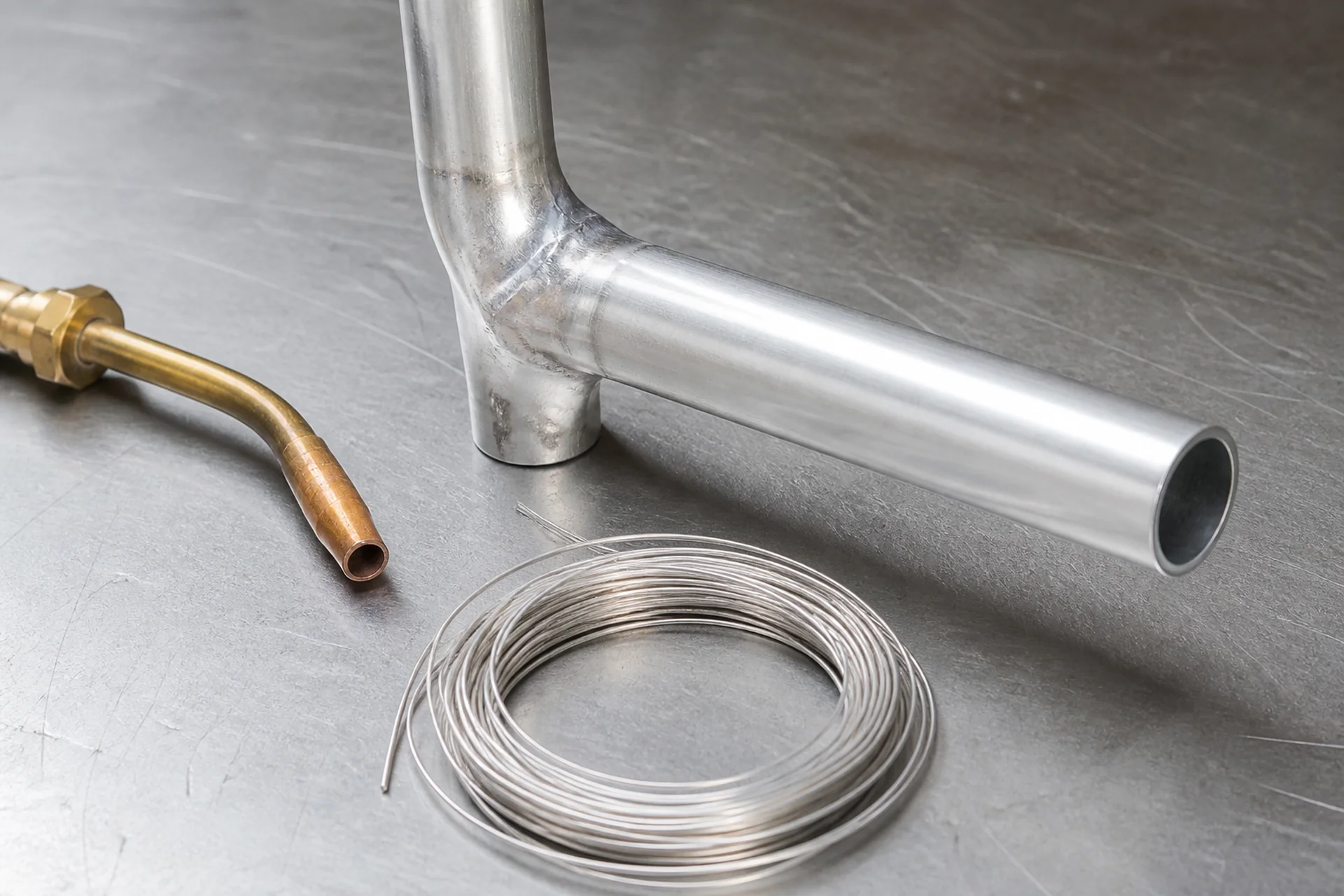
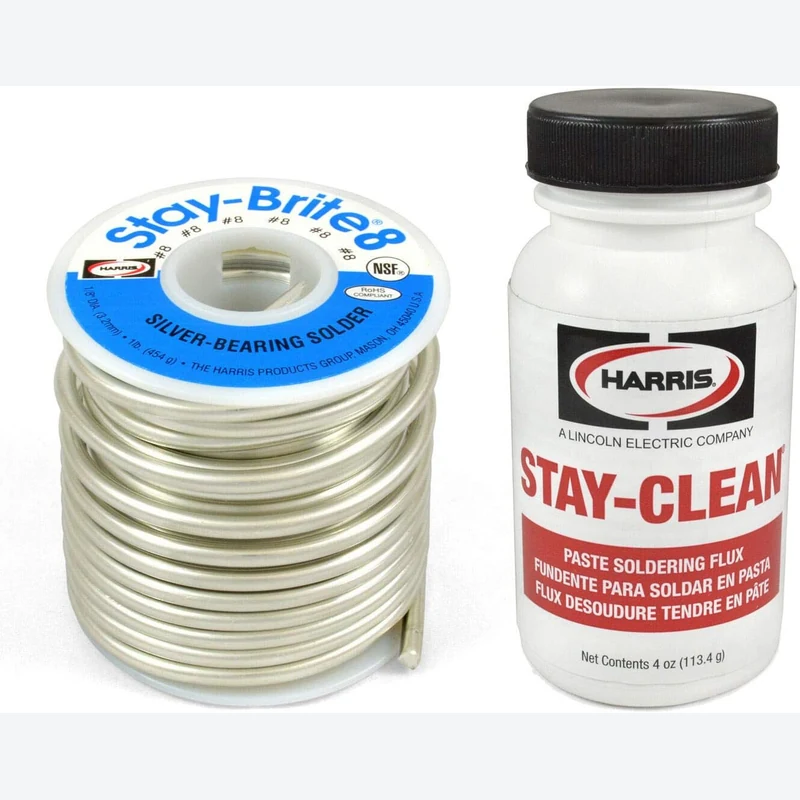
Aluminum appears everywhere in modern HVAC and refrigeration — condenser coils, distribution headers, and OEM transition fittings where copper meets aluminum in the field. Stay-Brite 8 is a premium tin-silver solder optimized for copper, brass, steel, and stainless. On bare aluminum, oxide formation fights ordinary tin-silver wetting. This page explains honest application limits, when dedicated aluminum solder is required, and how to execute copper-side transitions without callbacks.
We will not pretend one alloy solves every aluminum joint. Technicians who understand that distinction save hours of rework. Read alongside our flux guide, HVAC page, and problems troubleshooting resources.
Aluminum oxide challenge
Aluminum forms an invisible oxide skin within seconds of abrasion. Standard Stay-Brite 8 chemistry flows beautifully on copper at 535–550°F but cannot reliably break through that oxide without aluminum-specific flux and often a dedicated aluminum-bearing filler. Attempting to force copper-grade solder onto raw aluminum condenser ports produces the grainy lumps that fail pressure tests by afternoon.
The fix is not more heat — overheating collapses thin aluminum tube walls and burns flux before the alloy wets. The fix is matching filler and flux to the base metal on each leg of a bimetallic joint.
Where Stay-Brite fits
Stay-Brite 8 belongs on the copper side of transition joints — copper line sets into brass or copper fittings that mechanically bridge to aluminum OEM components. Many service scenarios involve replacing a copper stub or saddle on equipment where the aluminum portion remains factory brazed or swaged. Solder the new copper work with Stay-Brite 8 while leaving intact aluminum sections undisturbed.
On pure copper-to-copper repairs near aluminum equipment, Stay-Brite 8 delivers roughly 10,000 PSI tensile strength with lead-free, RoHS compliant chemistry. Shield adjacent aluminum fins and tubes with wet rags and flame blankets — lower melting range than brazing helps, but aluminum still conducts heat quickly toward delicate coil lands.
Dedicated aluminum solder
When you must bond directly to aluminum — repair ports, patch thin-wall distribution, or rebuild sections OEM specifies as aluminum-solderable — reach for dedicated aluminum solder formulated with flux cores or paired flux that attacks oxide without destroying base metal. Our aluminum solder product targets those scenarios while Stay-Brite 8 handles the copper branches in the same assembly.
Do not mix alloys in one joint puddle. Sequence the work: aluminum side first with aluminum filler, then copper side with Stay-Brite 8 after mechanical isolation or fitting separation prevents cross-contamination.
Surface preparation steps
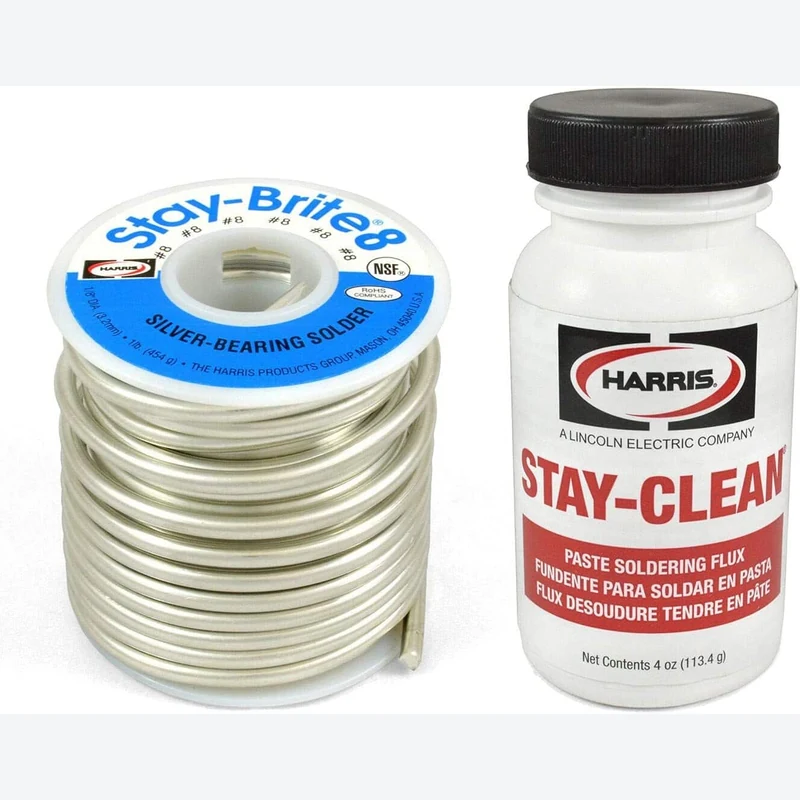
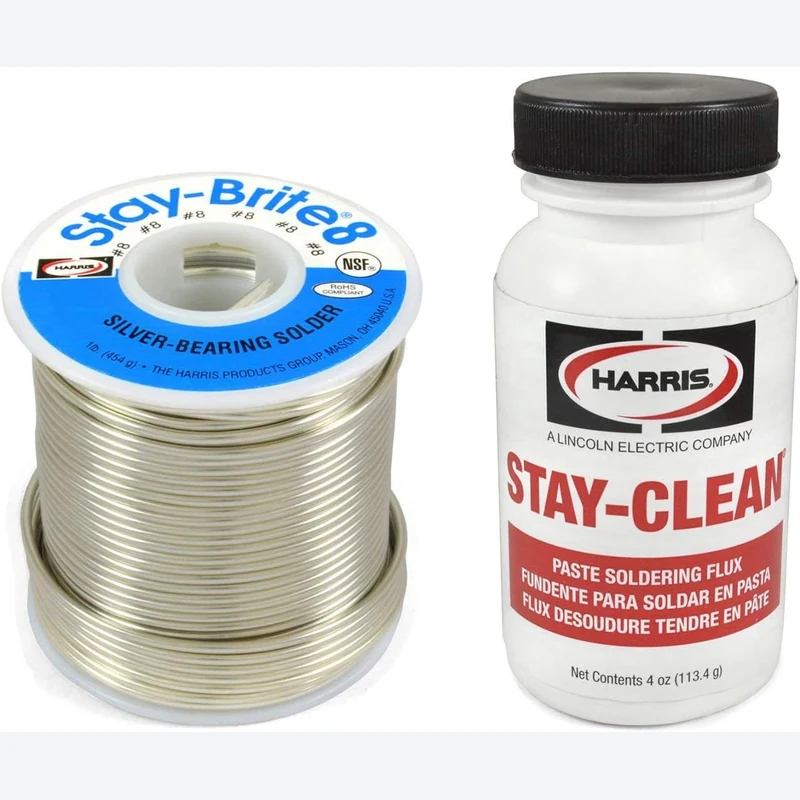
Stainless brush or dedicated aluminum abrasive removes oxide immediately before fluxing. Work quickly — delay lets oxide reform. Apply aluminum-rated flux, gentle preheat with a broad flame pattern, then introduce aluminum solder when flux clears. For copper legs, switch to Stay-Clean flux and Stay-Brite 8 wire with a separate brush to avoid chemistry clash.
Degrease coil areas near the joint before heating. Oil from handling collects on aluminum fins and vaporizes into soot that contaminates the joint surface. Nitrogen flowing lightly through open lines keeps interior walls clean during exterior work on refrigeration circuits.
Condenser coil repairs
Condenser micro-leaks on aluminum tube land between fin packs are common callback drivers. Pinhole epoxy and clamp saddles are temporary; proper solder repair needs access and alloy match. When tube wall thickness allows, aluminum solder builds a fillet over a cleaned defect. Stay-Brite 8 is inappropriate for the aluminum tube itself — use it only if the repair transitions into a copper stub you've added downstream.
Fin damage from excessive heat reduces coil capacity. Use tip extensions and directed heat away from the fin pack. If fins are melted across a wide band, coil replacement may cost less than efficiency loss over the equipment life.
Transition fitting strategy
Mechanical transition fittings — brass or copper bodies with aluminum stubs — let you solder the copper line with Stay-Brite 8 while the factory aluminum joint stays intact. This is the preferred field approach when OEM parts are available. Forcing monolithic solder across dissimilar metals without a designed fitting invites galvanic corrosion and differential expansion failures.
Where engineers specify brazed aluminum joints only, do not substitute solder because torch setup is inconvenient. Code, warranty, and pressure ratings override truck-stock convenience.
Heat control on aluminum
Aluminum conducts heat faster than copper — the joint looks cold while the far side is already near melt temperature. Use a softer, broader flame and watch for color change rather than waiting for copper-style cherry red. Stay-Brite 8 on nearby copper fittings still demands copper-style heat profile — sequence work so aluminum steps complete before copper cups overheat.
The melting range, not a single point, still helps on copper legs with slightly wide clearances. That property does not transfer to aluminum oxide surfaces — do not confuse range forgiveness on copper with aluminum wetting success.
Flux discipline matters
Copper flux on aluminum fails. Aluminum flux on copper can corrode lines. Label brushes and bottles in your kit. Paste flux helps vertical condenser transitions but must be matched to the alloy side you are working. Rinse or wipe residues per product instructions before pressure testing — mixed residues create false leak signatures under soap bubbles.
Full pairing tables live on our solder and flux page. NSF 51 listing on Stay-Brite 8 applies to copper potable-adjacent work; aluminum condenser paths are closed-loop refrigerant — still keep interiors flux-free.
Testing mixed-metal joints
Pressure-test aluminum and copper legs together after the full assembly cools. Nitrogen standing pressure reveals gross voids; vacuum decay on refrigeration systems catches pinpaths electronic sniffers miss. If the aluminum side fails, cut back to sound metal — layering more alloy over oxide never heals the root defect.
Document which filler was used on each segment for future service. A technician who sees aluminum solder on the port and Stay-Brite 8 on the copper stub understands the repair logic — mystery blobs invite destructive disassembly.
What to stock
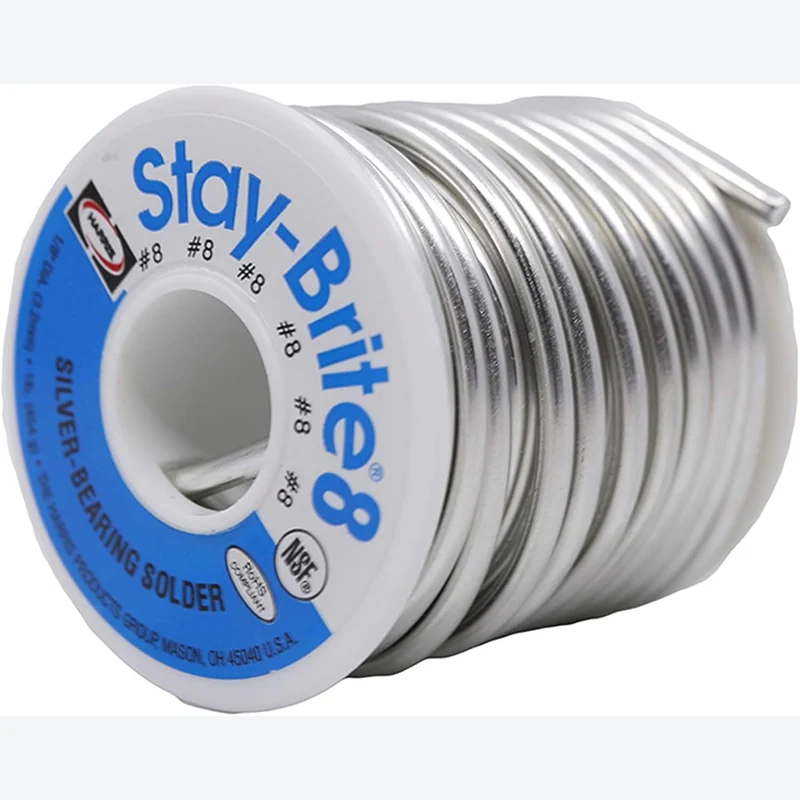
Carry aluminum solder, a 1 oz Stay-Brite 8 spool for copper legs, Stay-Clean and paste flux with separate applicators, stainless aluminum brushes, and heat shields sized for condenser work. Train apprentices on the alloy decision tree before handing them a torch near coated coil stock.
For silver content context and pressure limits on copper legs, see silver content and pressure rating. Owner experiences with mixed-metal jobs are collected on reviews.